Services ▾
All servicesMeta Ads ManagementGoogle Ads ManagementTikTok Ads ManagementeCommerce MarketingSEO ServicesGenerative Engine OptimisationAnswer Engine OptimisationLocal SEOWordPress DevelopmenteCommerce WebsitesCustom WebsitesLanding PagesCase study · Google Ads
Tow truck calls up 5.5× while cost per conversion fell 77%
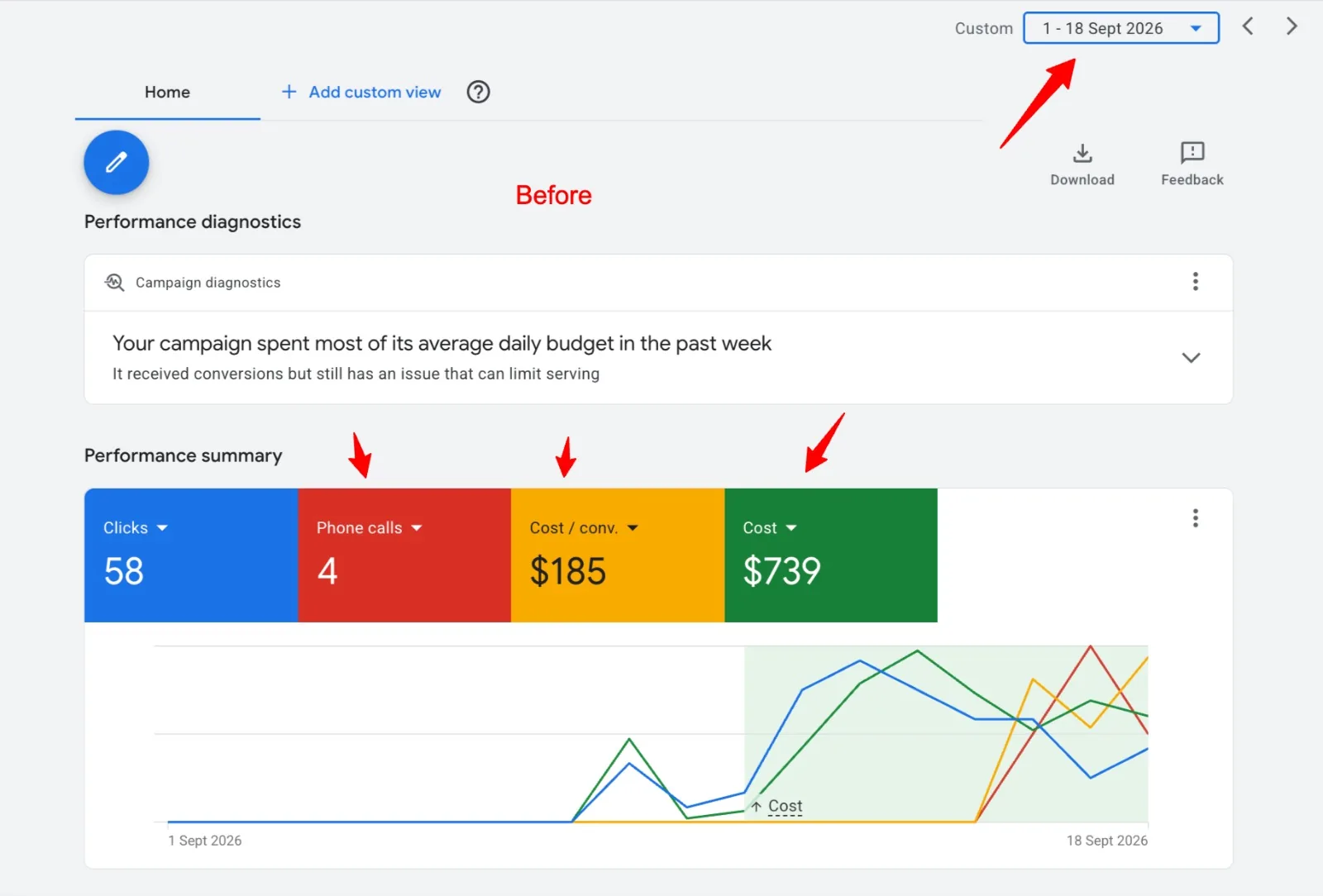
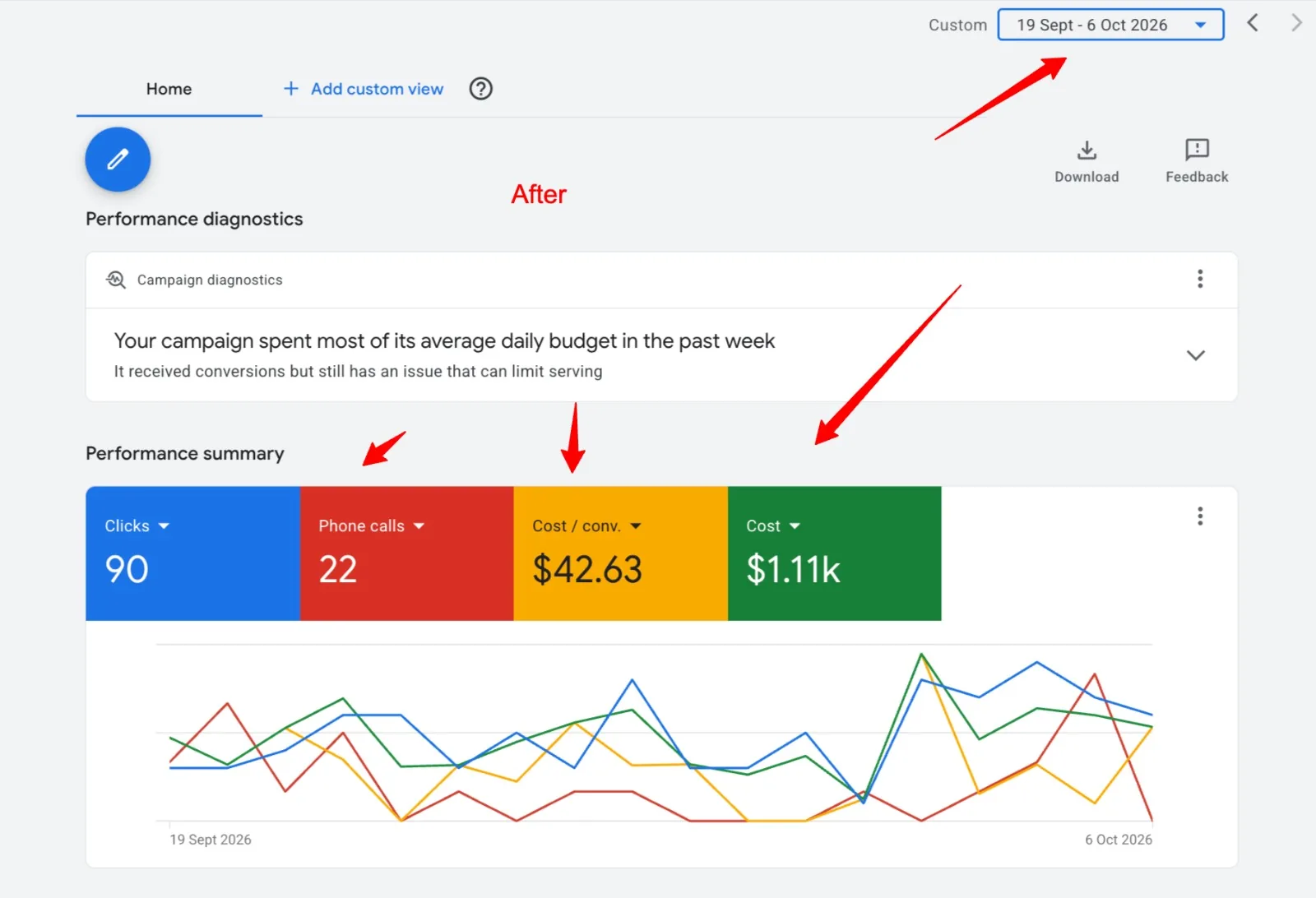
A towing and roadside assistance company on Google Search. Two 18-day windows side by side: spend rose by half, clicks rose by half, and phone calls went from 4 to 22. The extra calls did not come from more traffic. They came from the same kind of traffic deciding to ring.
 By Abdul Kader Zilani, digital marketing consultant·Google Ads delivered with my team·Last reviewed
1 September – 6 October 2026 · Google Ads, Search campaign · US$ account
Who searches for a tow truck?
Someone standing next to a car that will not move, usually on a phone, often stressed, sometimes at night. They are not comparing three quotes. They ring the first number that looks credible and close. For a towing company that means one metric matters above every other: phone calls.
It also makes it an expensive auction. The average click in this account cost $12.31. At that price every irrelevant search the ads show up for is real money, and a click that does not ring is close to a straight loss.
What changed between the two windows?
Across two 18-day windows, spend rose 50% and clicks rose 55%, almost exactly in step. Phone calls rose from 4 to 22, which is 5.5 times. When calls grow ten times faster than clicks, the gain is coming from conversion rate rather than from buying more traffic.
| Metric | 1–18 Sept | 19 Sept – 6 Oct | Change |
|---|---|---|---|
| Clicks | 58 | 90 | +55% |
| Phone calls | 4 | 22 | 5.5× |
| Cost per conversion | $185.00 | $42.63 | −77% |
| Spend | $739 | $1,108 | +50% |
| Calls per click | 6.9% | 24.4% | 3.5× |
Both windows are 18 days long, which keeps the comparison fair. Spend in the second window is $1,108, shown in Google Ads rounded to $1.11k.
How is the campaign structured?
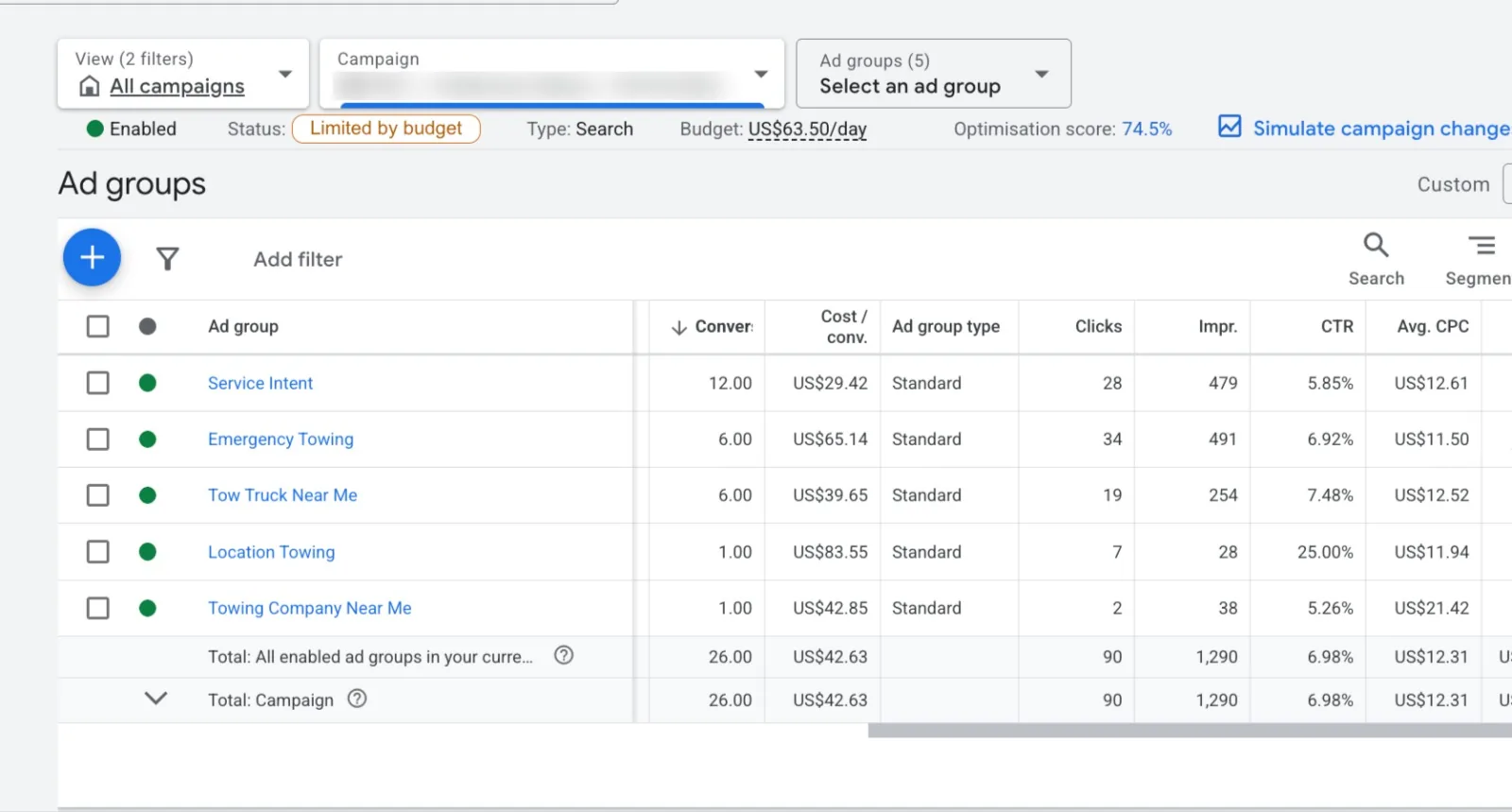
One Search campaign, five ad groups, each built around a different reason someone is searching rather than around a list of similar words. Every keyword is phrase match, which keeps the ads on searches that contain the actual need while still catching the many ways people phrase it.
| Ad group | What the searcher means | Conversions | Cost / conv. |
|---|---|---|---|
| Service Intent | “I have a problem and need it handled” | 12 | $29.42 |
| Tow Truck Near Me | “Who is closest to me right now?” | 6 | $39.65 |
| Emergency Towing | “This is urgent” | 6 | $65.14 |
| Towing Company Near Me | “Show me a business, not just a truck” | 1 | $42.85 |
| Location Towing | Searches naming the town | 1 | $83.55 |
26 conversions in total from 90 clicks and 1,290 impressions, at a 6.98% click-through rate.
Which searches actually produced calls?
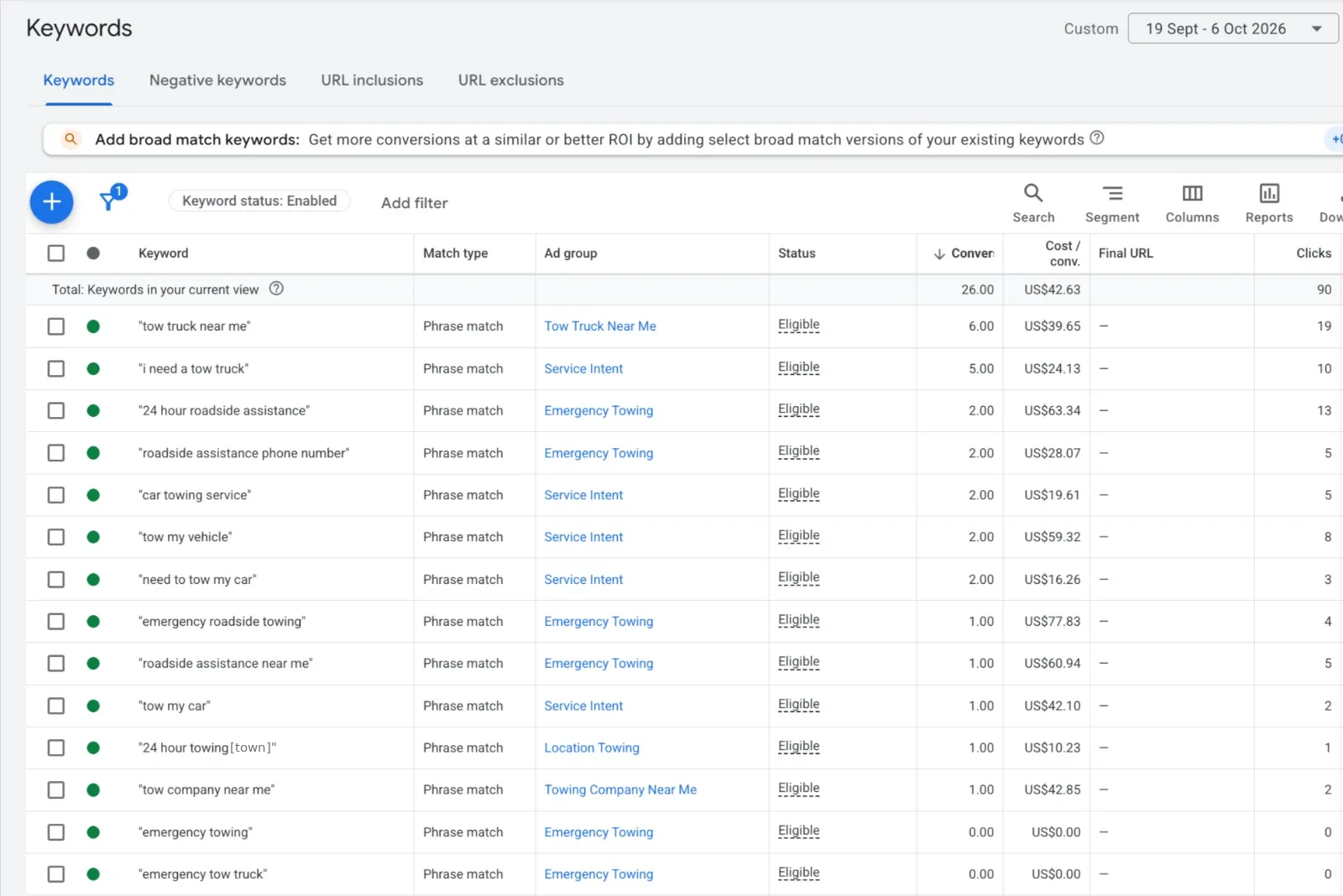
The plain, first-person searches won. “I need a tow truck” converted five times at $24.13 each, and “need to tow my car” at $16.26. The urgent-sounding terms cost far more: “24 hour roadside assistance” ran at $63.34 per conversion and “emergency roadside towing” at $77.83.
That is counter-intuitive, and it is the most useful thing in this account. You would expect the word emergency to signal the most motivated buyer. In practice every towing company bids on it, which pushes the price up, and it also attracts people researching roadside cover rather than people stuck on the hard shoulder. Someone who types “I need a tow truck” has already decided. They just need a number.
| Keyword (phrase match) | Conversions | Cost / conv. | Clicks |
|---|---|---|---|
| “I need a tow truck” | 5 | $24.13 | 10 |
| “tow truck near me” | 6 | $39.65 | 19 |
| “car towing service” | 2 | $19.61 | 5 |
| “need to tow my car” | 2 | $16.26 | 3 |
| “24 hour roadside assistance” | 2 | $63.34 | 13 |
| “emergency roadside towing” | 1 | $77.83 | 4 |
| “emergency towing” | 0 | — | 0 |
Small numbers, so read the direction rather than the decimals. Several keywords have one or two conversions, and one more call would move their cost noticeably.
What does this result not prove?
Part of it is the launch settling
The first eight days of the “before” window show no spend at all. Some of the improvement is a new campaign leaving its learning phase, and it would be dishonest to credit all of it to the work.
$42.63 is every conversion, not every call
The account recorded 26 conversions, 22 of them phone calls. Divide spend by calls alone and the cost per call is about $50. Both numbers are true; they answer different questions.
18 days is a short window
Towing demand moves with weather, holidays and traffic. This is a strong early result, not a settled long-term cost per call, and the small keyword counts need more time to firm up.
It is a US account, not a UK one
The account bills in US dollars. UK breakdown and recovery searches behave similarly, but auction prices, competitors and terms such as “recovery” rather than “towing” differ.
What should a UK call-led business take from this?
If your customers phone rather than fill in a form, as with recovery, locksmiths, plumbers, drain clearance or emergency electricians, three lessons transfer directly: measure calls as the conversion, group keywords by what the searcher needs rather than by similar words, and test whether your “emergency” terms are earning their premium.
In UK English the same need is often searched as “car recovery” or “breakdown recovery near me” rather than “tow truck”, so the keyword list changes, but the structure does not. If you want that set up properly, it is exactly what our Google Ads management starts with, and local SEO covers the map pack side of the same searches.
Questions about this case study
What is a good cost per call for a towing company on Google Ads?
It depends on what a job is worth, not on a benchmark. In this US account a conversion cost $42.63 and a phone call about $50, with clicks at $12.31. A tow or recovery job that pays several times that is profitable; one that does not is not, however good the ratio looks.
Should towing and recovery companies use phrase match or broad match?
Phrase match is the safer starting point in an expensive local auction. It keeps ads on searches that contain the actual need while still catching natural variations. Broad match can work later, once conversion data is reliable, but at $12 a click it wastes money quickly when the signal is thin.
Why did “emergency” keywords cost more per conversion?
Because every competitor bids on them, which raises the price, and because they also attract people researching breakdown cover rather than people who need a truck now. First-person searches such as “I need a tow truck” come from someone who has already decided.
How long before a new Google Ads campaign settles?
Usually two to four weeks. A new campaign needs enough clicks and conversions for bidding to stabilise, and results in the first week or two are rarely representative. That is why this case study compares two full 18-day windows rather than single days.
About the author
I am Abdul Kader Zilani, a digital marketing consultant working with ecommerce brands and service businesses. I run the paid social myself and deliver Google Ads, search and web work with a small team I have worked with for years. Every figure on this page comes from the Google Ads account shown in the screenshots, and I will tell you when a number flatters us.
Paying for clicks that never ring?
Send us your Google Ads account access or your last month’s numbers. On a free call we will tell you whether the problem is keywords, structure, the landing page or the call tracking itself.